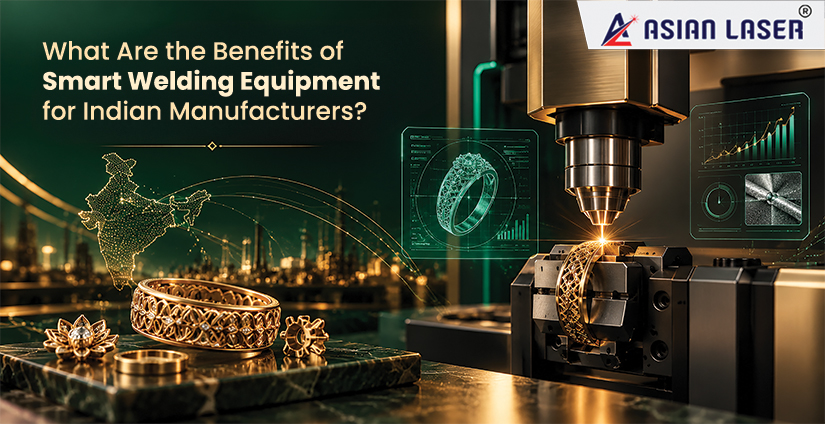
What Are the Benefits of Smart Welding Equipment for Indian Manufacturers?
Smart welding equipment is helping manufacturers improve precision, repeatability, production efficiency, and quality control. By using controlled welding parameters and, where available, digital monitoring or automation features, businesses can reduce process variation and make better use of materials and labour.
For Indian manufacturers, these benefits matter in industries where quality expectations are rising and production costs need close management. In jewelry manufacturing, for example, even a small welding error can damage a delicate component, create visible marks, or lead to expensive rework. Laser welding offers a way to concentrate heat on a specific area, making it a useful option for many precision joining and repair applications.
However, smart welding equipment does not always mean a fully automated or AI-powered machine. Depending on the model, it may involve controlled energy settings, repeatable operating parameters, digital controls, monitoring features, or integration with automated production systems. Understanding these differences helps businesses select equipment that addresses their real manufacturing challenges.What Is Smart Welding Equipment?
Smart welding equipment refers to welding machines and systems that use controlled processes, digital functions, automation, or monitoring technologies to improve welding performance. The exact capabilities vary. Some systems allow operators to set and repeat specific welding parameters, while advanced industrial installations may use sensors, robotics, and software to monitor production.
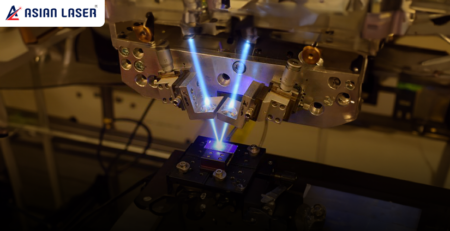
Laser welding machines can support precision work by delivering concentrated energy to a defined area. Operators select suitable settings for the material and joint, position the workpiece, and control the welding process according to the machine’s design. Certain systems may provide additional programmable or monitoring functions, but these features should be confirmed for each model.
For small manufacturers, smart welding does not necessarily require a complex robotic production line. A precision machine with appropriate controls may offer meaningful improvements over a process that depends entirely on manual heat application.
What Are the Main Benefits of Smart Welding Equipment for Indian Manufacturers?
The most important benefits are better process consistency, more controlled heat application, improved productivity, and the potential to reduce material waste and rework. The results depend on the equipment, operator skill, workpiece design, and production environment.
1. Improved Welding Precision and Consistency
Precision is essential when joining small metal components or producing products with strict appearance requirements. Manual welding can produce excellent results in experienced hands, but outcomes may vary with operator technique, positioning, and heat control.
Suitable smart welding systems help operators repeat established settings and maintain greater control over the process. In jewellery manufacturing, laser welding can direct energy towards a small target area, which may help limit unnecessary heating of the surrounding metal.
Consistent results can improve finished-product quality and reduce the time spent correcting defects. Nevertheless, equipment alone cannot guarantee a perfect weld. Material compatibility, joint preparation, correct settings, and operator training remain important.
2. Higher Productivity and Better Workflow
Manufacturers often need to increase output without sacrificing quality. Smart welding equipment can support this goal by making recurring operations more repeatable and reducing time lost to inconsistent results.
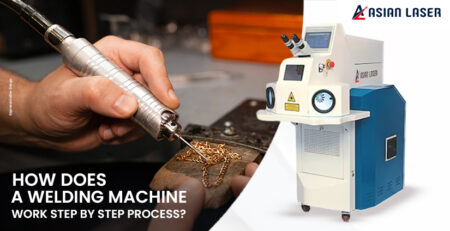
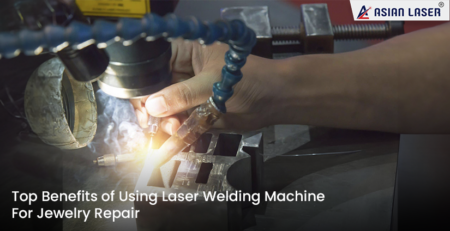
In a jewellery workshop, for example, a suitable laser welding machine may help with recurring repairs involving chains, clasps, rings, or other compatible metal components. The actual time saved will depend on the job, the operator’s experience, and the amount of preparation required.
Businesses should evaluate the complete workflow rather than focusing only on the time taken to make a weld. Component handling, inspection, finishing, and maintenance also affect production capacity. A practical demonstration using representative workpieces can help establish whether a machine will improve throughput in real operating conditions.
3. Reduced Material Waste and Rework
Material waste can have a direct financial impact on manufacturing businesses. This is particularly relevant to jewellery producers, where precious metals are expensive and even a small damaged component may require additional work.
Controlled welding can help reduce avoidable defects when the process is correctly configured. Laser welding’s localised heat application may also help limit unwanted thermal effects in suitable applications. Together, these characteristics can support more efficient use of materials.
However, reduced waste should be treated as a potential benefit, not a guaranteed result. Manufacturers should compare defect rates, repair time, and material consumption before and after introducing new equipment. Measuring actual results provides a stronger basis for calculating savings than relying on general product claims.
4. Better Control Over Heat Application
Heat control is especially important when working with thin metal sections, intricate designs, or components located near heat-sensitive materials. Excessive heat can distort a workpiece, affect its surface finish, or damage nearby elements.
Laser welding uses a concentrated beam to deliver energy to a targeted area. Depending on the material and the selected parameters, this can reduce the area exposed to heat compared with some conventional joining methods.
For jewellery repair, that can be useful when working on small metal sections. Still, nearby gemstones, coatings, soldered joints, and heat-sensitive treatments may be affected. Each item needs an appropriate assessment before welding, and suitable protective procedures must be followed.
5. Improved Process Repeatability
Repeatability means producing similar results when performing the same operation under comparable conditions. This matters when a manufacturer repeatedly joins similar components or handles recurring repair jobs.
Equipment with suitable parameter controls can help operators reproduce an established process instead of relying entirely on memory or subjective judgement. This can support consistent workmanship across shifts and reduce variation between jobs.
Repeatability does not mean every component can use identical settings. Changes in alloy, thickness, joint design, or surface condition may require adjustments. Manufacturers should document validated settings for relevant applications and confirm that they continue to produce acceptable results.
Which Indian Industries Can Benefit from Smart Welding Technology?
Smart welding technology serves a wide range of manufacturing applications, although the most suitable system varies by industry.
Automotive and engineering: Manufacturers may use automated or robotic welding systems for repetitive components and production lines. These systems can support consistent weld placement and help manage high-volume operations.
Metal fabrication: Suitable welding automation can improve repeatability in recurring fabrication tasks. The correct technology depends on the material thickness, joint type, component size, and production volume.
Electronics and precision manufacturing: Some applications require highly controlled joining with limited heat spread. Specialised welding processes may be suitable when validated for the materials and components involved.
Jewellery manufacturing and repair: Precision laser welding can support compatible jobs involving gold, silver, platinum, and other metals, depending on the machine’s capabilities. Its localised heat application makes it relevant for certain delicate repairs and small-component joining tasks.
These examples should not be taken to mean that one machine can handle every industrial application. Equipment must be selected for the actual materials, joint requirements, and operating conditions.
Why Smart Laser Welding Matters for Jewellery Manufacturers
Jewellery businesses face a combination of challenges: valuable materials, small components, detailed designs, and high expectations for the finished appearance. A joining method that applies excessive heat or creates unnecessary surface damage can increase finishing time and repair costs.
Laser welding offers a useful option for suitable jewellery work because it concentrates energy on a targeted area. It can be considered for tasks such as repairing certain chains, joining compatible components, and working on selected ring or clasp repairs. The outcome depends on the alloy, thickness, joint design, equipment settings, and operator technique.
Laser welding does not replace every traditional soldering process. Soldering remains useful for many jewellery applications, and the best method depends on the job. Manufacturers should compare both methods based on quality, access to the joint, heat sensitivity, finishing requirements, and overall cost.
What Should Manufacturers Consider Before Investing?
Before purchasing smart welding equipment, businesses should identify their most frequent welding tasks and the problems they want to solve. A workshop struggling with delicate repairs may need precision and controlled heat application, while a high-volume industrial factory may require robotic movement, production-line integration, or automated inspection.
Evaluate these factors:
- Material compatibility: Confirm which metals, alloys, and thicknesses the machine can handle.
- Welding requirements: Consider joint size, access, appearance, and required strength.
- Control features: Check which parameters can be adjusted or stored and whether monitoring features are available.
- Training and safety: Review operator training, protective measures, and applicable laser safety requirements.
- Maintenance and support: Ask about service, upkeep, spare parts, and technical assistance.
- Total cost of ownership: Include the machine price, training, maintenance, consumables, and expected savings from reduced rework.
A supplier demonstration using real production samples can help determine whether the equipment meets practical requirements. Businesses should also calculate the expected return on investment using realistic production volumes and measured costs.
Smart Welding Equipment from Asian Laser
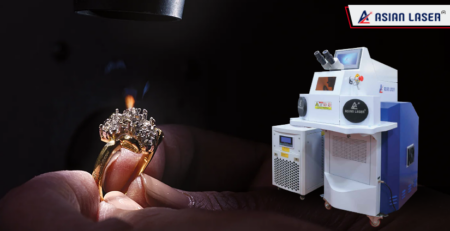
For jewellery manufacturers and repair workshops exploring precision laser welding, Asian Laser is a relevant supplier to investigate. Product pages available for reference include the Potenza 225 compact laser welding machine and the Fino 100 compact laser welding machine.
These products are relevant to the jewellery laser-welding discussion, but buyers should review their current specifications rather than assume that every smart welding feature is available on both machines. Before making a purchase, confirm the supported materials, suitable applications, available controls, safety requirements, and service arrangements directly with the supplier.
Manufacturers should also explain the types of jobs they handle most often when requesting a demonstration. Testing representative components can provide a clearer picture of the machine’s suitability than relying on broad descriptions of precision or productivity.
Conclusion
Smart welding equipment can help Indian manufacturers improve process consistency, manage heat more precisely, reduce avoidable rework, and make production workflows more efficient. These advantages are most meaningful when the equipment matches the materials, joint requirements, production volume, and skill level of the team using it.
For jewellery manufacturers, laser welding can be particularly useful for compatible precision joining and repair tasks. Its concentrated heat application may help protect surrounding material, but correct settings, careful preparation, and operator expertise remain essential.
Before investing, businesses should compare machine capabilities, training, maintenance, safety, and total operating costs. A well-matched welding solution can support better manufacturing outcomes without requiring every business to adopt a fully robotic production system.
Frequently Asked Questions
1. What are the benefits of smart welding equipment for Indian manufacturers?
Key potential benefits include more consistent weld quality, improved process control, reduced rework, better productivity, and more efficient material use. Actual results depend on the machine, application, and operator training.
2. How does smart welding equipment improve manufacturing quality?
Equipment with controlled parameters can help reproduce established welding processes and reduce variation between similar jobs. Correct material selection, joint preparation, and quality checks are still necessary.
3. Is laser welding useful for jewellery manufacturing?
Laser welding can be useful for compatible jewellery repairs and manufacturing tasks involving small metal components. Suitability depends on the metal, thickness, joint design, nearby gemstones, and machine capabilities.
4. Does smart welding equipment reduce production costs?
It may reduce costs by limiting avoidable rework, improving workflow efficiency, or reducing material waste. Businesses should measure actual operating costs and productivity before assuming a particular level of savings.
5. What should I check before buying a smart welding machine?
Check material compatibility, welding requirements, available controls, safety procedures, training, maintenance, technical support, and total cost of ownership. A demonstration with representative workpieces is a practical way to assess suitability.